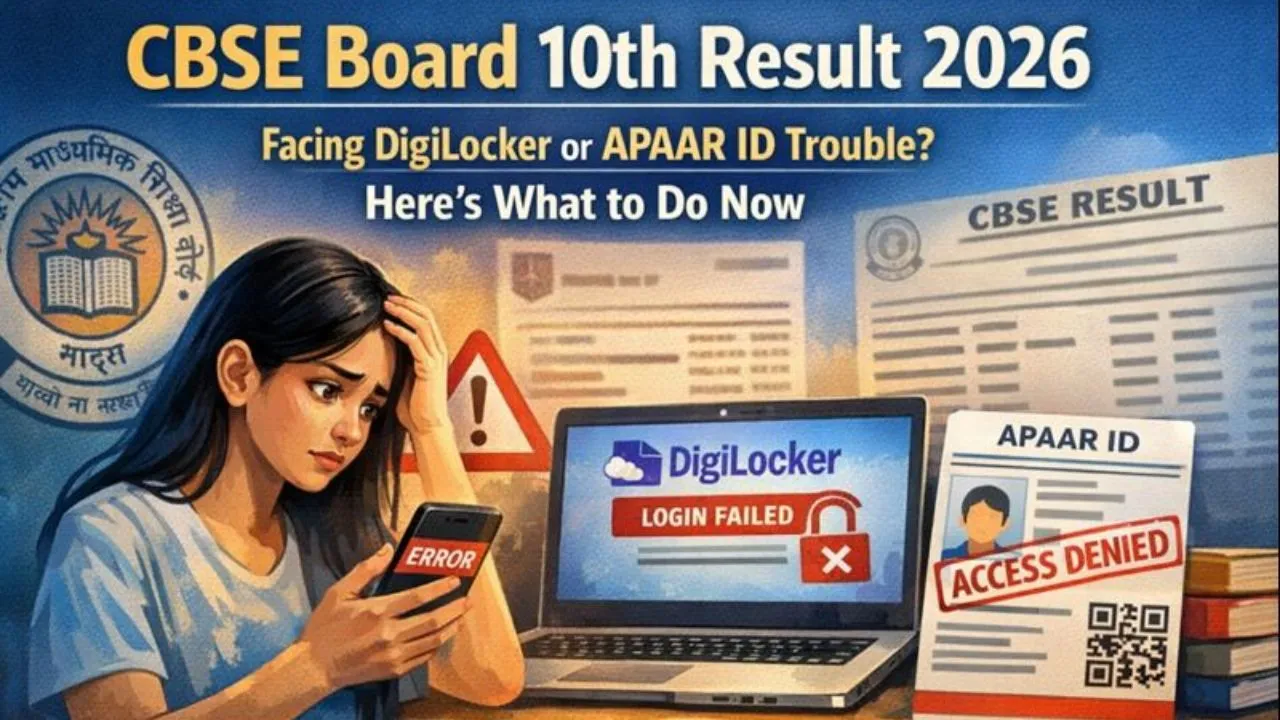
The announcement of the CBSE Board 10th Result 2026 is a momentous occasion for millions of students across India, marking the culmination of their secondary education. However, as the digital landscape of the Indian education system evolves, the process of accessing results has shifted toward more secure, centralized platforms. This year, the Central Board of Secondary Education has integrated DigiLocker and the Automated Permanent Academic Account Registry (APAAR) ID as primary methods for document verification and result retrieval. While these tools are designed to streamline the experience, many students are reporting technical hurdles, ranging from Aadhaar mismatches to delays in ID generation. Navigating these digital bottlenecks requires a proactive approach, ensuring that every student can celebrate their achievements without the unnecessary anxiety caused by login errors or missing credentials.
Understanding the Importance of DigiLocker and APAAR ID
The shift toward a paperless academic ecosystem is spearheaded by DigiLocker and the APAAR ID, two pillars of the government’s Digital India initiative. DigiLocker serves as a virtual vault, allowing students to download legally valid, digitally signed marksheets and migration certificates that are recognized by higher education institutions and employers alike. Complementing this is the APAAR ID, often referred to as the “One Nation, One Student ID.” This unique 12-digit identifier tracks a student’s academic journey from pre-primary to higher education, storing credits and achievement records in a single location. For the 2026 result cycle, having these accounts verified and active is not just a convenience—it is a necessity for those who wish to avoid the heavy traffic on official CBSE websites and secure their official documentation instantly.
Common Technical Roadblocks and Their Root Causes
Despite the robust infrastructure, several students have encountered issues when trying to sync their school records with these digital platforms. One of the most frequent complaints involves “Data Mismatch” errors, where the name or date of birth on the Aadhaar card does not perfectly align with the school’s admission records. Furthermore, the generation of the APAAR ID requires school-level authentication; if a school has not updated the student’s profile on the national portal, the ID remains pending. Other common grievances include the non-receipt of One-Time Passwords (OTPs) due to outdated mobile numbers linked to Aadhaar and server timeouts caused by the massive volume of concurrent users. Recognizing these patterns is the first step toward finding a solution before the result day rush begins.
Step-by-Step Resolution Guide for DigiLocker and APAAR ID
To resolve these issues, students should first verify their details through their respective schools. Since the APAAR ID is primarily initiated by educational institutions, checking with the school coordinator ensures that the “Consent Form” has been processed and the data uploaded correctly. If you are setting up your DigiLocker independently, ensure your mobile number is updated in the UIDAI database, as this is the primary channel for OTP verification. For those unable to generate an APAAR ID, DigiLocker now offers a manual search option: navigate to the “Education” section, select “APAAR,” and enter your 10th-grade roll number and school code as the primary identifiers. This cross-referencing often bypasses minor synchronization delays and allows for immediate ID generation.
| Service Feature | Requirement | Primary Benefit |
| DigiLocker Account | Aadhaar-linked Mobile Number | Instant download of digital marksheets |
| APAAR ID | School Consent & Aadhaar | Lifetime academic credit tracking |
| CBSE Access PIN | Provided by School | Extra layer of security for result login |
| UMANG App | Registration via Mobile | Alternative mobile-based result access |
Alternative Methods to Access CBSE 10th Results
While DigiLocker and APAAR ID are the preferred digital channels, the CBSE provides several redundancies to ensure no student is left in the dark. If technical glitches persist, students can fall back on the traditional official result portals—results.cbse.nic.in and cbseresults.nic.in. Additionally, the UMANG mobile application provides a streamlined interface for result viewing, often proving more stable under high load than browser-based sites. For students in areas with limited internet connectivity, the CBSE also maintains an Interactive Voice Response System (IVRS) and an SMS-based service. By sending a specifically formatted message with their roll number to the designated board numbers, students can receive their marks directly on their mobile handsets, bypassing the need for a data connection entirely.
Proactive Measures for a Stress-Free Result Day
The key to a smooth experience on result day is preparation. Students are advised to log into their DigiLocker accounts at least a week before the expected result date to ensure their profile is fully “Aadhaar Verified.” If there is a discrepancy in the Aadhaar data, it is crucial to visit an Aadhaar Enrollment Center immediately for corrections, as these updates can take a few days to reflect. Additionally, students should keep their 6-digit security PIN—issued by the CBSE to schools—handy, as this is often required for first-time DigiLocker activation. By addressing these technicalities early, students can focus on their future academic transitions rather than troubleshooting login screens.